Whatever brings you here, we’ll guide you through the options, helping you make choices that are right for you.
Let us help you plan a funeral
Whether you’re arranging a funeral now, in the near future, or just want to plan ahead, we’ll guide you through the options and help arrange a unique, personal farewell.
Cremation
With so many options, getting it right starts with knowing what you want.
Hydrolysis, also known as water cremation, is legally possible in Scotland and we look forward to being able to deliver hydrolysis funerals once a facility is available.
I’ve never organised a funeral before – where do I start?
We don’t meet clients expecting them to have all of the answers. It’s our role to listen to what’s important and guide you to arrange a funeral that’s “just right”. There may be a clear plan to follow or you have to make some guesses along the way. We’ve got local knowledge, years of insight so you can lean on our experience throughout. Read our 'Five questions for a funeral director' guide.
Funerals take longer these days, why?
Nowadays, funerals take around 7-14 days to arrange. The timescales have crept up due to various factors: the length of administration to register and approve a funeral has increased; funerals are more personalised and individual which takes time rather than rush big decisions; and families are more scattered globally which slows down the decision making process as we factor in travelling requirements. It’s also true that the resources and techniques available to preserve someone who’s died and store them safely, have improved allowing families more time to make arrangements.
What happens to flowers after a funeral?
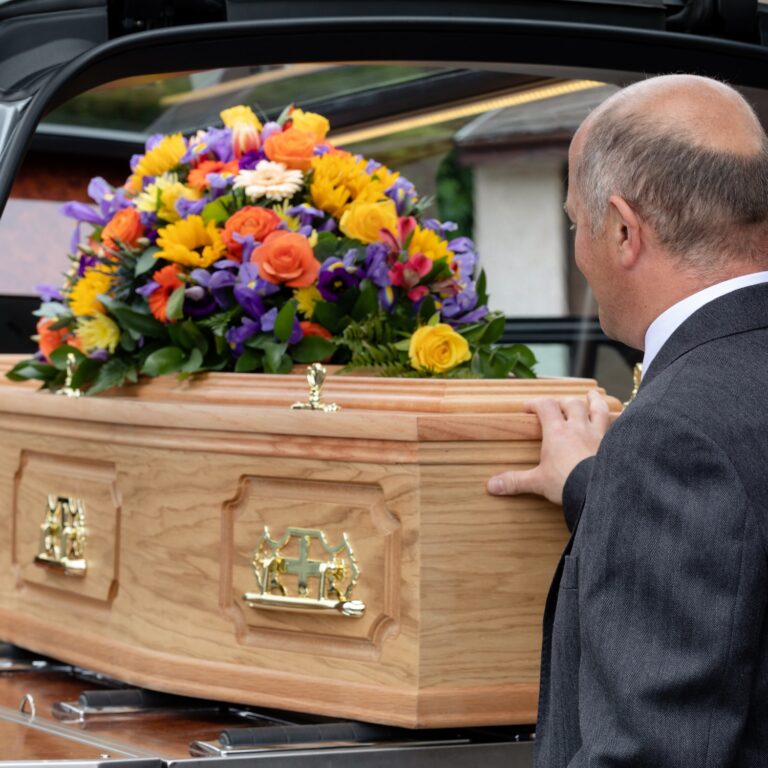
There are a number of options available to families who order flowers for a funeral. They can be left around the graveside or at crematorium, or they can be taken to any planned celebration after the funeral. Some families choose to divide tributes as mementos for mourners, while others place them on a family memorial in days that follow.
Does the hearse carry passengers?
It is possible to arrange transport in the same hearse as a passenger and we recommend you speak to your funeral director to clarify options.
Do we have to use a celebrant or someone that isn’t family to lead a service?
There is no rule or requirement when it comes to leading a service. Those who knew the person who’s died often take the officiant role. We can provide celebrant recommendations whether that’s a faith leader, celebrant or humanist. And if none are required, we can assist whoever a family chooses when it comes to preparing tributes and organising a service.
Do you offer direct cremations?
We cater for every type of funeral. Direct cremations are also known as unattended funerals as there is no service arranged. There are pros and cons to direct cremations and we strongly advise speaking to a funeral director to explore if this option is right for you and your loved ones.
Can we have someone walk in front of the hearse?
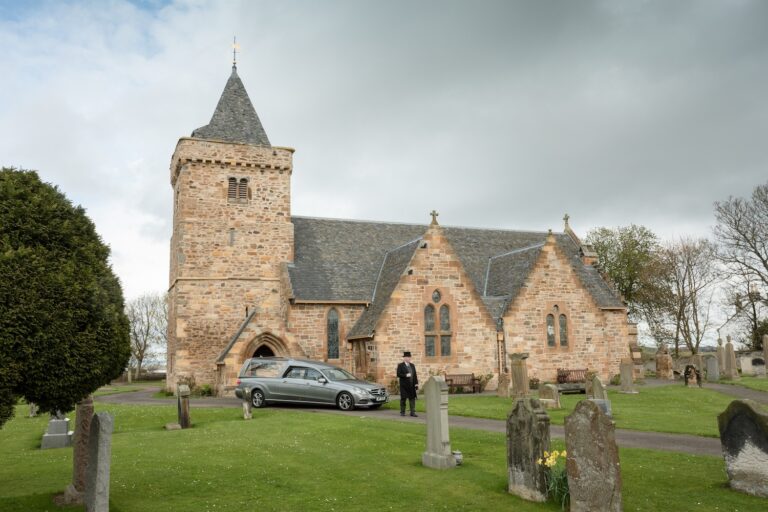
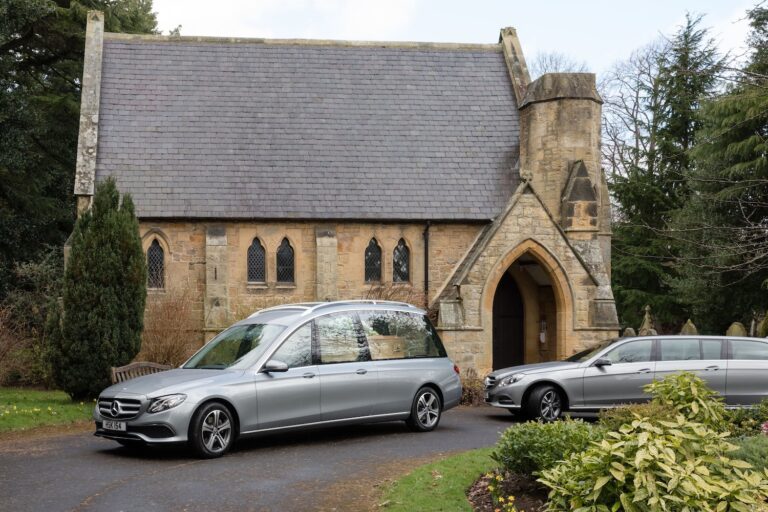
Paging is where a funeral director will lead the hearse and cortege. Usually this is done on arrival to the cemetery or crematorium, leaving a family home, passing a place of significance, particularly where mourners are gathered to pay their respects. We can page at any time, multi-times on a last journey. Speak to us about possibilities especially if this will make the experience more personal for those left behind.
Does the hearse have to drive at a certain speed?
There are no rules when it comes to going fast or slow when we take someone on their final journey. We will always respect the road conditions and any other considerations that could impact the route and speed. If this is something you want to explore further to make it more personal, ask your funeral director.
This may sound silly…
There’s no such thing as a silly question. We’re here to listen and help you to arrange a funeral with knowledge, insight and guidance. In fact, sometimes it’s that very question that helps shape a funeral that’s “just right”.
We're not sure if embalming is for mum.
Embalming is optional. It’s recommended if you anticipate a delay before the funeral takes place. This may be to allow family members to travel and say goodbye first. Or if the funeral itself takes more than a few days to arrange: registration turnaround times may be longer, venue or officiant availability may mean booking a later date than expected or a large event could require longer to arrange. It’s also recommended if you plan to spend time to say goodbye as embalming delays the natural process allowing your loved ones, and those who are caring for her, to be safe in doing so.
If I want to deliver a eulogy, how long should it be?
Like a funeral, the eulogy is very personal and there is no rule to their timescale. Our recommendation is to prepare a 3-4 minute tribute as there may be other funeral elements to factor in overall: music, readings, digital tributes or other contributions.
How many passengers can travel in the limousines?
We can accommodate seven passengers in a limousine. Officiants can be transported within the family group or we can make arrangements with them to accompany us or travel directly. It’s also possible for us to arrange less formal transport if that’s required. Or if large numbers are anticipated, we can also book coaches.
Are children allowed to travel in our fleet?
Children are welcome to travel in our limousines provided they are accompanied by a responsible adult who must supply and fit relevant car seats or cushions as required.
What is the major cost difference between a burial and cremation?
There are various factors to consider when choosing burial or cremation. Urban areas where ground is scarce often have higher burial fees and there may be out-of-area considerations. Cremation options may be limited and consequently cost more overall for those who live far away from a facility, but the purchase of ground may be more affordable. Burials will also incur cemetery fees to open existing graves, or to purchase new ground. There are also memorial costs likely to be related to burials for adding inscriptions or to purchase new stones. Cremations are one cost: unattended options do not include a service and attended cremations will include service costs. Ashes are returned within this fee but there may be additional costs to inter or bury these in a grave along with any storage or memorial keepsakes.
How long should we keep the ashes?
There’s no right or wrong answer for how long to keep a loved one. It’s a very personal thing and we can explore options and advice to support you. It’s possible to use our Ashes Library (Lothian only) and we can offer a range of memorial keepsake solutions.
Can I make sure everyone who attends is thanked?
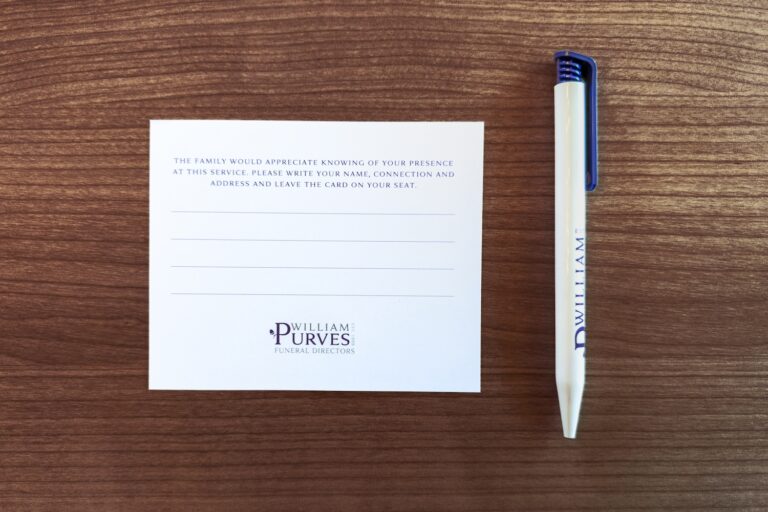
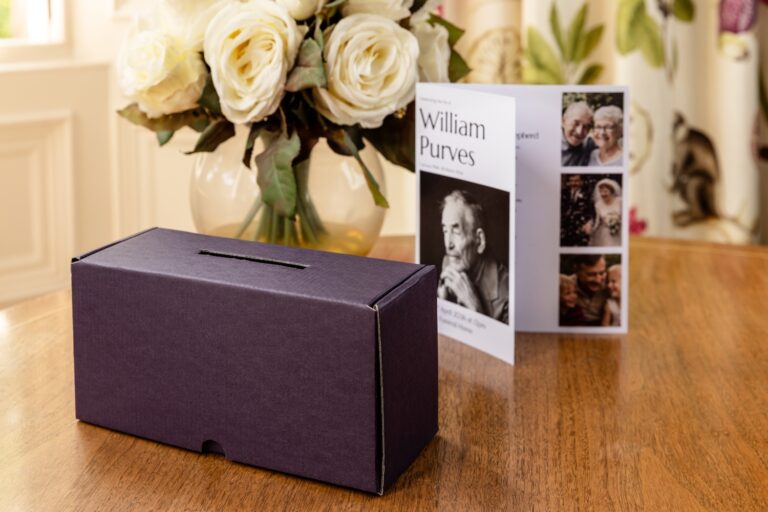
On the day, we’ll provide attendance cards and pens as mourners arrive, or leave these on the seats in your venue. These invite messages of condolence and stand as a touching tribute to record who came on the day. As people leave, we collect the cards and deliver them to you. Speak to us about options.
Is there a limit to the number of cars we hire on the day?
With a large fleet to offer, we can assist with large numbers on the day. For some funerals, our cars have been hired to transport flowers or displays, as well as people and we can arrange to collect or convene as suits you. Baby car seats need to be provided by families and we can also arrange to collect officiants or celebrants as well as arrange routes of significance. It’s also possible to blend hearses: start with a Mercedes or Land Rover Defender hearse and change to a horse and carriage. Where we can, we’ll make all your ideas possible.
Can we leave a photo in the coffin?
There are strict rules about what can be left in a coffin for cremations, hydrolysis (once a facility becomes available) and for woodland or natural burials. If you plan to visit your loved one to say goodbye, you can have photos or other keepsakes and we can guide you as to what can be left once we know your choices of funeral.