

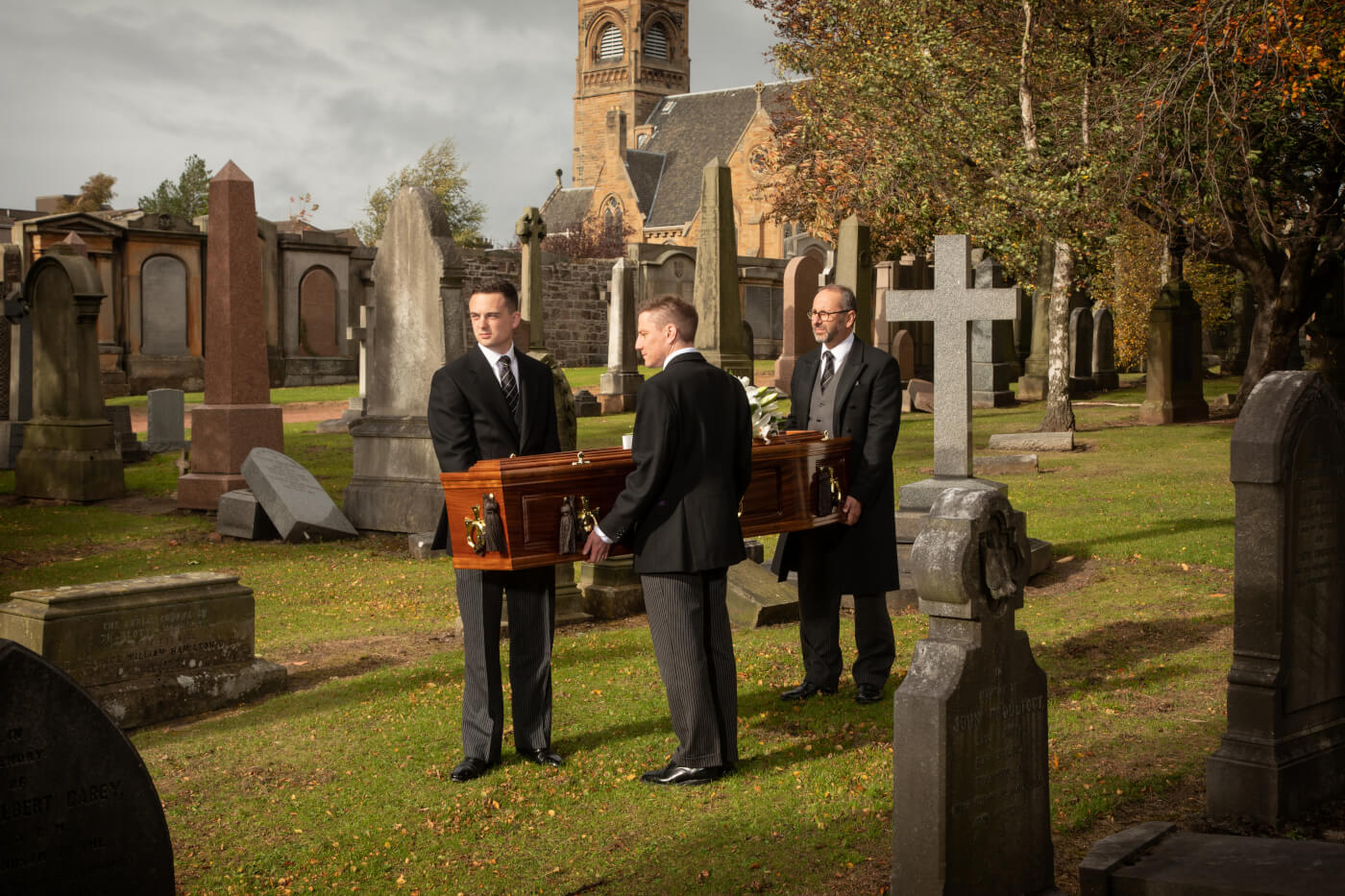
Burial is influenced by whether you have a family grave (or lairs in Scotland) or availability of new ground in a cemetery or natural woodland site. From March 2026, new ground in Scotland will offer a right of burial for 25 years. Burials can cost more than cremation when you factor in the cost of new ground, or fees to open and inter existing graves.
Cemeteries
Council Cemeteries
Not all UK council cemeteries have room for new burials as ground is very limited. Where pre-purchase is possible, some councils may allocate specific plots at the time of need only. It’s also increasingly common for out-of-area surcharges to apply for people living out-with council boundaries.
Private Cemeteries
Most privately owned cemeteries or churchyards with space allow graves or lairs to be purchased in advance.
Natural Woodland Sites
A natural burial site or woodland cemetery can provide an alternative resting place in a nature-led setting. There are a few woodland cemeteries in Scotland and the north of England that we visit regularly. Sites operate different rules, but it’s common that graves do not feature traditional headstones and are pared back with trees, bushes boulders or simple plaques – sometimes with nothing showing at all.
Private Land
It is possible to be buried on your land provided the site is not near a water table. Landowners require the appropriate permissions so if this is something you’d like to consider, we can discuss regional requirements.
Memorials and Markers
We mark the sites of graves with traditional headstones, a service we can provide for all cemeteries in the UK. Increasingly, markers are used to mark a grave for a temporary time before a formal headstone is commissioned or amended. And it’s also possible to use markers for some natural or woodland sites, and even private homes where the interment of ashes is planned.

To get an idea of the day’s possible running order, here’s our family guide to burial.