
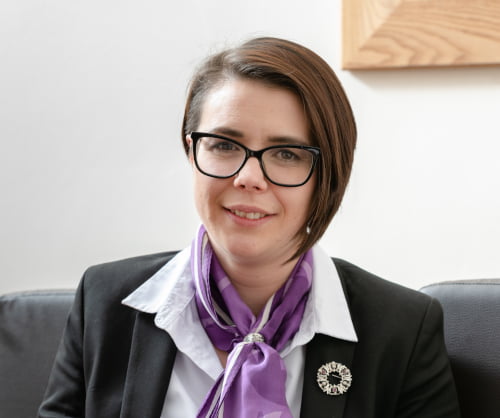

Scotland is poised to become the first part of the UK to introduce hydrolysis should the proposed Scottish Government Regulations be approved on 02 March 2026, as our COO Andrew Purves explored in a recent interview with STV News.
For the first time in over 100 years, families will be able to choose from three options: burial, cremation or hydrolysis funerals.
What is hydrolysis?
Hydrolysis, or alkaline-hydrolysis, combines warm water with an alkaline solution and applies them to the body in a cremation-like chamber. This speeds up the natural processes that a body ordinarily goes through, taking approximately three hours. Like cremation, hydrolysis leaves behind a white powder similar to ashes. Families can keep, scatter or have them buried at a cemetery.
Public reaction
Much like the Cremation Act of 1902, the legislation of hydrolysis may initially be viewed with some scepticism or distrust. In the first year cremation was introduced in the UK, of the 600,000 funerals, only 3 were cremations. It will take time to build trust and for the public to fully embrace a third option when it comes to organising or planning ahead for a funeral. Initially, costs may be higher than cremation due to the specialist equipment required and the limited availability of facilities. It is anticipated that it will take up to a year to get planning and construct a facility in Scotland.
The benefits
However, for many within the sector and the general public, this is welcome news. With a lower carbon footprint than cremation, hydrolysis offers an environmentally friendly alternative to traditional forms of body disposal. Already available in Ireland, the Netherlands, Australia, Mexico and some parts of the USA and Canada, hydrolysis is also often seen as a gentler, more compassionate process for the deceased.
With interest in natural burials and biodegradable coffins increasing, hydrolysis may prove more popular among those looking for more sustainable or environmentally friendly funeral options. Polling done by the Scottish Government in 2024 pointed to an 84% approval response for hydrolysis. We’re already witnessing funerals driven by personal choice rather than tradition, and know how important it is that families feel they “got it just right”. Hydrolysis provides even more choice in a market that benefits from regulation and where funeral directors like William Purves place emphasis on highest standards of care for those who have died, and the family left behind.
Support for the proposals has been widespread from the UK’s funeral trade associations SAIF and NAFD. We’ll keep you posted on developments as the deadline of 2 March approaches.
You can also watch Andrew’s interview on catch-up via STV Player.